
 Deep brain stimulation, or DBS, as it is commonly called, refers to electrodes implanted within specific places in the brain. The electrodes generate electrical impulses that have an impact on brain activity. The amount of electrical activity generated is controlled by a device positioned under the skin that is kind of like a pacemaker. A wire is placed under the skin to connect the device to the electrodes in the brain. DBS is used to treat health conditions, such as epilepsy, essential tremor, Tourette syndrome, and Parkinson’s disease.
For people with Parkinson’s disease, DBS can be a godsend. It can help with slowness, stiffness, dyskinesia, tremor, as well as movement issues that occur between medication doses.
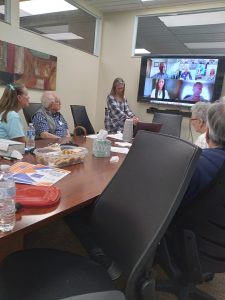
At the last Peer2Peer Parkinson’s Group meeting, Idil Baysal, ARNP and Ryder Guinn, M.D. of EvergreenHealth gave a presentation on DBS. Guinn is a neurosurgeon who performs DBS implants. Max Guici, Boston Scientific DBS representative, was also available to answer questions.
As with any surgery, DBS surgery is not without risk, which is why prospective candidates are carefully chosen. Idil Baysal, ARNP screens prospective DBS patients at EvergreenHealth in western Washington and takes care of them from the beginning to the end of the process. When it comes to DBS as treatment for Parkinson’s disease, she said a good candidate is someone who has “significant motor symptoms like tremors, stiffness, slowing of movement, or dystonia. They must still respond to levodopa and are perhaps experiencing off/on fluctuations when their meds wear off unpredictably. These individuals might be experiencing dyskinesias from the amount of medication they are needing to take to have control over their motor symptoms.” Another important factor is the DBS candidate needs to be in good physical shape. They also must not have significant cognitive issues. As part of screening, DBS candidates go through testing, including neurophysiological testing which picks up cognitive problems.
When it comes to DBS versus Parkinson’s medication, DBS “can provide superior outcomes than pharmacological treatment alone in specific situations, such as when a patient stops having reliable control of their motor symptoms,” Baysal said. Because DBS provides continuous stimulation, motor symptoms are usually better managed and more stable, hour to hour, she said. Baysal added that levodopa, when taken at higher doses, can cause dyskinesia that can be helped significantly by DBS. “With DBS therapy, patients can take less levodopa and have more on-time with less dyskinesia,” she said.
There are some things DBS may not help, such as energy level, walking, or mood, particularly if levodopa didn’t help prior to DBS treatment, according to the Parkinson’s Foundation. It can even worsen speech and swallowing problems or balance, especially if levodopa didn’t improve it before treatment with DBS.
Genetics can also play a role in how someone will respond to DBS. Patients with the LRRK2 mutation usually do extremely well with DBS, while those with the GBA mutation tend to have “a slightly higher risk of cognitive changes after DBS therapy,” Baysal said. In general, patients with the GBA mutation are thought to have a “somewhat faster disease progression,” she said. Still, “DBS can absolutely help the motor symptoms of Parkinson’s in patients with a GBA mutation, but these individuals should be evaluated more carefully,” she added.
The Peer2Peer Parkinson’s Group meets the third Thursday of each month at Disability Action Center NW in Moscow.