
 Seeing the World thru Color Blind Eyes
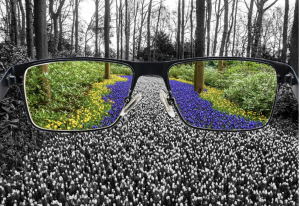 Seeing the World thru Color Blind Eyes
Color Blindness Awareness is a global initiative to educate the public about color vision deficiencies (CVD), promote color accessibility, and support the estimated 350 million people affected worldwide. Color blindness affects 1 in 12 men (about 8%) and 1 in 200 women (about 0.5%) globally.
What does it mean if you have color blindness? This means you see colors differently than most people. CVD makes it hard to tell the difference between certain colors.
According to the National Eye Institute, the most common type of CVD makes it hard to tell the difference between red and green.
Another type makes blue and yellow look the same. In rare cases, people have complete CVD, which means they don’t see color at all.
Watch Tennessee Viewfinders for the Colorblind | TN Vacation to learn about what Tennessee has done to help those with color blindness experience the state’s lush forests with bright greens and yellows in the spring and vivid reds and oranges in the fall.
Red-green color blindness is inherited through the mother’s X chromosome. Because it is an X-linked trait, it comes from both parents for daughters, but only from the mother for sons. The two genes that produce red and green light-sensitive proteins are located on the X chromosome. Mutations in these genes can cause color blindness.
The first person to realize that color blindness exists was John Dalton (1766-1844). As a scientist, he became aware that neither he nor his brother saw colors the same way as everyone else. He believed this was because they both had blue liquid in their eyes, which of course was not the case. Dalton left his eyes to science so that people could find out the actual cause when he died. Even though he did not correctly understand what the cause was of his and his brother’s color blindness, Dalton did understand that because both he and his brother were affected that their condition must be hereditary. Then, over 150 years later, DNA proved he had inherited color blindness. Color blindness is also known as Daltonism in his memory.
Men have a much higher risk than women for color vision deficiency. You are also more likely to have color vision deficiency if you:
- Have a family history of color vision deficiency
- Have certain eye diseases
- Have certain health problems, like diabetes, Alzheimer’s disease, or multiple sclerosis (MS)
- Take certain medications
- Are white
There is no cure for color blindness that is inherited, but most people can adjust to it. Children with color blindness may need help with some classroom activities, and adults with color blindness may need accommodations to do jobs that rely on telling the difference between colors, like being a graphic designer.
If your color vision deficiency is happening because of another health problem, your doctor will need to treat the condition that is causing the problem. If a medication is causing color blindness, your doctor may adjust how much you take or suggest you switch to a different medication.
If you would like to test yourself for color blindness, Enchroma provides a free Online Color Blind Test.
If you would like assistance in requesting accommodations for color blindness, reach out to DAC NEW at
(509) 606-4639.